Costume as permission
Dress-up makes public visibility easier. The outfit becomes a social signal: I have stepped into the event, and I am ready to be part of its image.
Sleaford public life
A high-summer show of costume, memory, music, food, families and public ease. Not only nostalgia, but a town giving itself permission to dress up, be seen and take a short rest from 2026.
27 June 2026
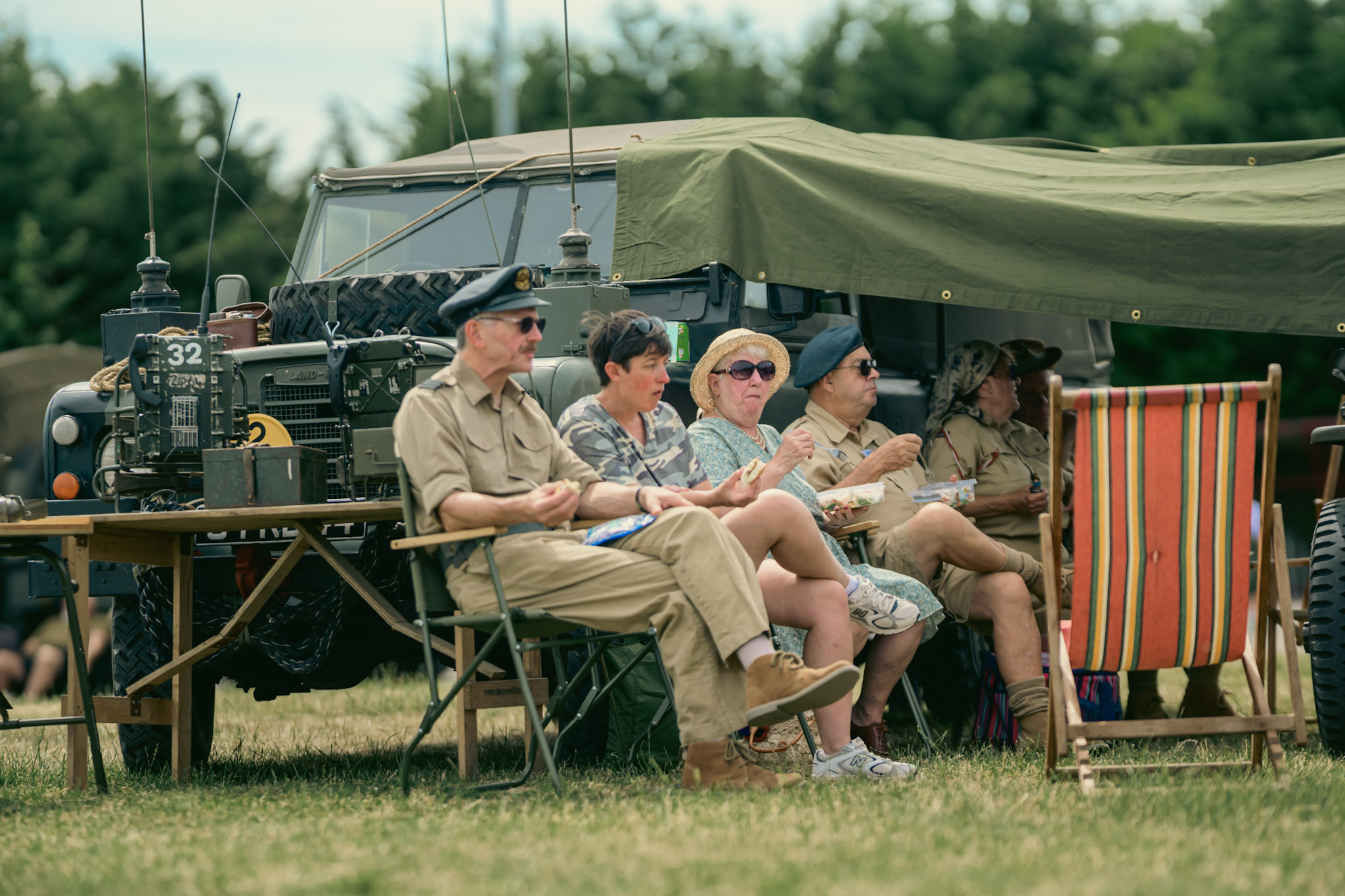
Sleaford 1940s Day is not simply a heritage theme day. It is part summer show, part family outing, part public performance and part local release valve. People came to sit in the sun, eat ice cream, drink beer, listen to singers, dance, talk, look good and be looked at.
The event offered older visitors a familiar register of music, dress and wartime memory, but it also belonged to young families using the day as an easy public pleasure. In a period when everyday life can feel pinched, anxious and expensive, that matters. Community events do not solve those pressures, but they give people a temporary shared room where ordinary happiness becomes visible.
For Damen Hartley, the interest is photographic and social: how Sleaford gathers, performs, remembers and presents itself in 2026. The unusual thing here was consent in motion. Many people in costume seemed to want the camera, sometimes even seeking it out. That changes the photographic relationship. The candid street habit gives way to a more open exchange: people using costume as permission to be seen.
Dress-up makes public visibility easier. The outfit becomes a social signal: I have stepped into the event, and I am ready to be part of its image.
The day turned memory into a shared activity: songs, uniforms, dresses, flags, vehicles and familiar wartime styling, softened by summer weather and leisure.
The photographs record more than a themed event. They show how a town uses pleasure, performance and gathering to tell itself it is still alive.
Gallery
The sequence below keeps the page simple: people, costume, waiting, food, movement, sun, shade and the small visual theatre of a town enjoying itself.
Damen Hartley in Sleaford
This work sits inside a wider Sleaford project: public space, performance, local memory, ordinary leisure and the small rituals that make a place feel like itself. Damen Hartley is not only photographing what Sleaford looks like, but how it gathers, rests, notices and asks to be seen.
Prints
Prints from this series can be ordered locally through Ruth Burrows Art Shop in Sleaford. Supporting local printing keeps the work close to the town it documents.